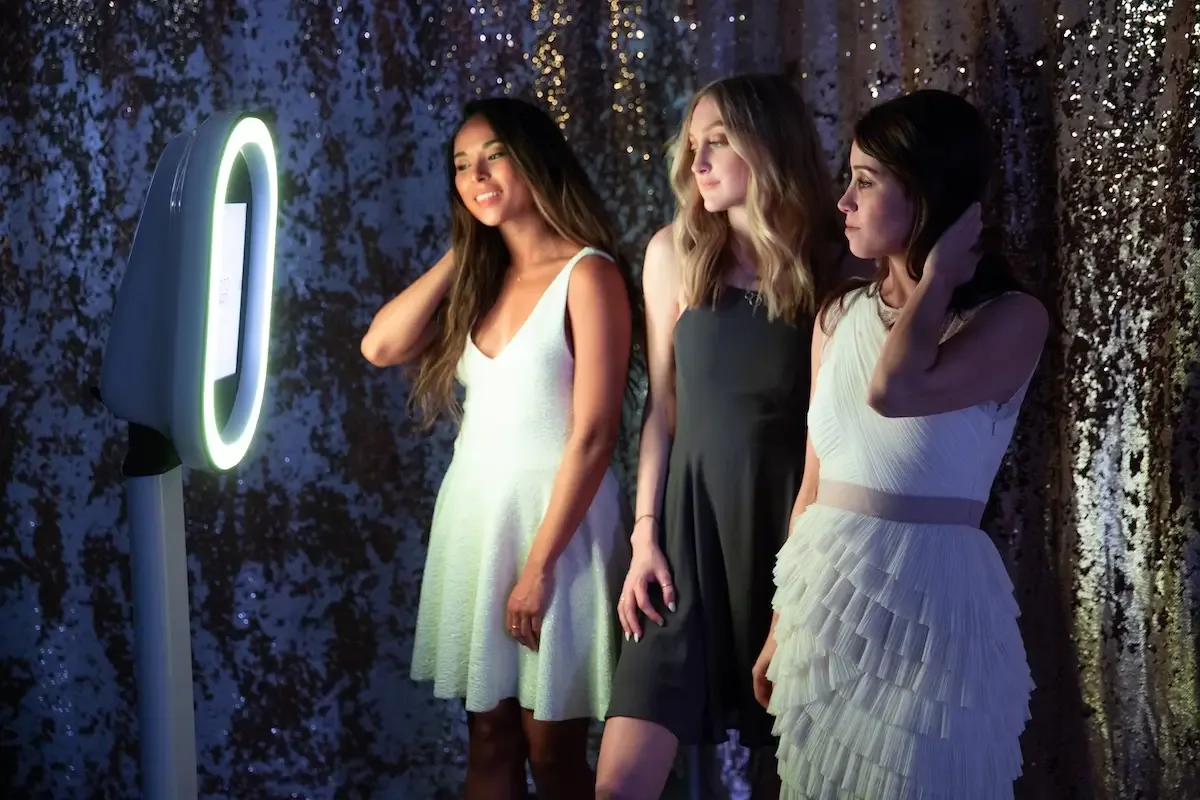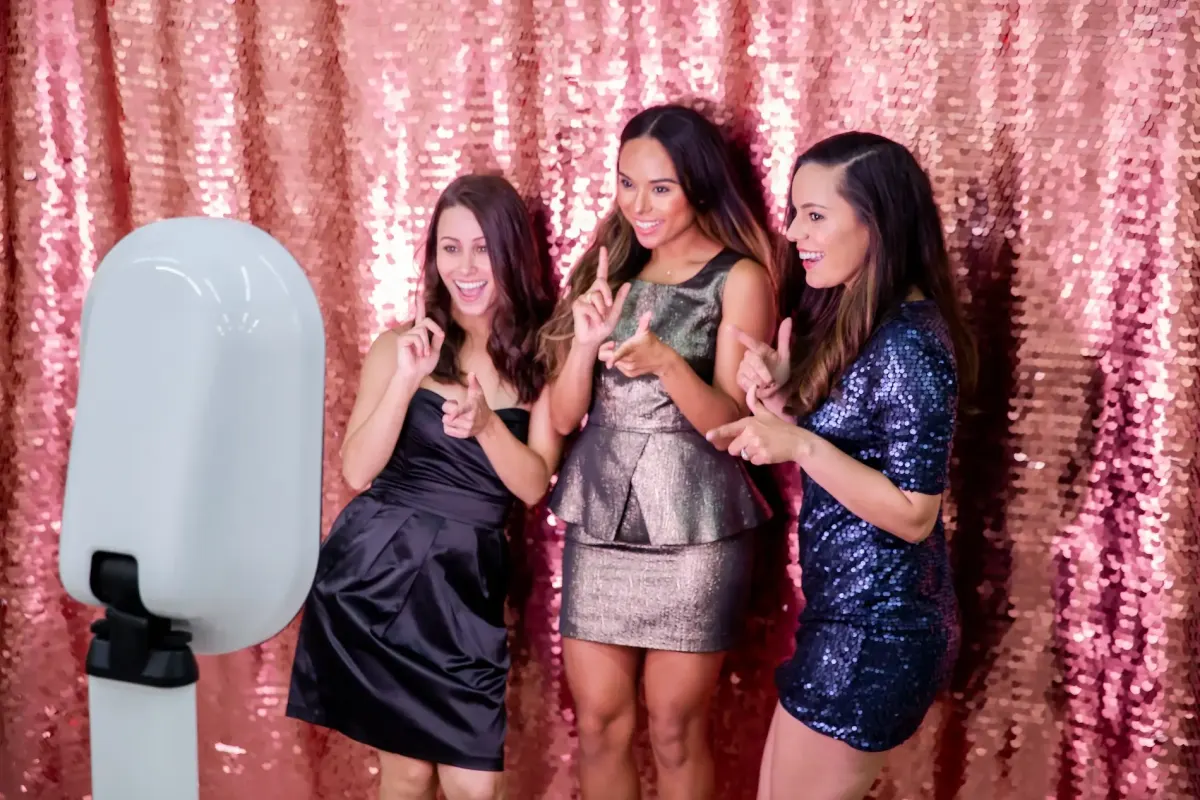
Las Vegas hosts more convention traffic than any city in America. If you are exhibiting here, a photo booth is one of the most reliable ways to stop foot traffic and capture leads on a crowded show floor.
The booth is the easy part. What catches exhibitors off guard is everything around it: the paperwork, the freight handling, the power order you had to place three weeks ago, and the load-in window you did not know was assigned. This guide covers the operational side, so your activation is running when the floor opens instead of stuck at a dock.
If you want the strategy side — what to put on the booth, how to design the experience — start with our trade show photo booth ideas guide. This one is purely logistics.
Convention Floors Are Not Ballrooms
A corporate party in a hotel ballroom and a trade show booth activation look similar on paper and behave nothing alike. On a convention floor:
- Your space is a rented footprint with published dimensions, not a room you can spread into.
- Freight goes through the show's general contractor, not your vendor's van.
- Power must be ordered in advance from the venue or show services, and it is not cheap on-site.
- Setup happens in an assigned window, often the day before, sometimes overnight.
Every one of those is solvable. None of them is solvable on show morning.
Start With the Exhibitor Kit
Every convention publishes an exhibitor service manual — sometimes called the exhibitor kit — and it is the single source of truth for your show. It contains the deadlines, order forms, and rules that govern everything below.
Read it the week you book your space, not the week of the show. Nearly every avoidable exhibitor expense comes from missing an advance-order deadline and paying show-site rates instead.
Pull these four things out of it immediately: the electrical order form and deadline, the material handling and shipping instructions, the certificate of insurance requirements, and your assigned installation and dismantle times.
Certificate of Insurance
Shows and venues require outside vendors to carry liability coverage and to file a certificate of insurance naming the show, the venue, or both. Requirements vary by show, and the deadline is usually well before move-in.
Ask your photo booth vendor one question early: can you produce a COI naming this show and venue, and how fast? A professional vendor answers same-day. If there is hesitation, that is your signal — a missing COI is the most common reason a vendor gets stopped at the dock, and it will cost you your activation.
Drayage: The Line Item Nobody Budgets
Drayage, or material handling, is the fee for moving your freight from the dock to your booth space and back. It is charged by weight, it is separate from shipping, and it surprises first-time exhibitors more than any other cost.
Two practical implications for a photo booth:
- Weight matters. A booth that arrives as hand-carried equipment through the exhibitor entrance may avoid drayage entirely, while the same setup shipped as crated freight incurs it. Ask your vendor how their equipment arrives.
- Confirm who handles it. Some vendors manage their own freight and labor; others expect you to. Settle this in writing before the show.
Power
Order electrical in advance. A standard photo booth needs a single 110V, 15-amp circuit — modest by trade show standards — but on a convention floor you cannot simply find an outlet.
Two things to specify on the order: the wattage (your vendor will supply it) and the drop location within your booth space. Getting the drop on the wrong side of a 10 x 20 island means running cable across your own carpet.
Footprint Math
Match the booth to the space you actually rented:
| Your space | What fits |
|---|---|
| 10 x 10 (inline) | A compact open-air booth against the back wall, with the backdrop doubling as your brand wall. Tight but workable. |
| 10 x 20 | An open-air booth in a dedicated corner with room for a real queue inside your space, plus product display. |
| Island / 20 x 20+ | A 360 video booth. The spinning arm draws eyes from several aisles away and needs 12 x 12 of clearance. |
The queue is the part exhibitors forget. A line that forms *inside* your footprint keeps prospects next to your product and your staff. A line that spills into the aisle gets flagged by show management.
Load-In, Show Hours, and Teardown
Installation happens in an assigned window before the floor opens. Confirm your vendor's setup time fits inside it, and that they know the correct exhibitor entrance and dock.
During show hours, traffic comes in waves — morning openings, lunch, and the post-keynote surge. Keep the booth live for all of them; a dark booth during a rush is leads you did not capture. Staff it with your attendant plus one personable team member: one runs sessions, one works the line. The line is your pipeline.
Dismantle is also scheduled, and floors clear fast. Vendors who have not worked conventions underestimate how quickly you need to be out.
Capture the Lead, Not Just the Photo
The operational reason to run a booth at a convention is data. Configure it before the show, not during:
- Custom fields on the delivery step (name, email, company, plus one qualifying question)
- Branded delivery so the photo arrives on a page with your call to action
- Same-day export so leads reach your team while the show is still warm
The follow-up email that opens with the prospect's own photo from your booth outperforms every other post-show email you will send. Our lead capture guide covers the full sequence, and customization options covers branding the experience itself.
Your Pre-Show Checklist
- Exhibitor kit read, deadlines calendared
- Electrical ordered in advance, with drop location specified
- COI filed with the show and venue
- Material handling arranged, and you know who pays for it
- Install and dismantle windows confirmed with your vendor
- Booth footprint mapped, including where the queue will form
- Lead capture fields configured and tested
- Post-show follow-up sequence written before you fly in
Working With a Local Vendor
There is a real advantage to booking a photo booth company based in Las Vegas rather than flying one in. Local vendors already carry the insurance, know the venues, and are not paying travel and freight to reach your booth — which keeps your budget on the activation instead of logistics.
We run corporate activations across the Las Vegas Valley, from Strip resort conference space to corporate offices and headquarters facilities throughout the city. Tell us your show, venue, and booth size and we will spec the setup, handle the insurance paperwork, and have your lead export ready before you leave the floor. See our corporate photo booth packages for what is included.
Frequently Asked Questions
What paperwork does a convention typically require?
A certificate of insurance meeting the show's limits, and in many cases vendor or exhibitor-appointed-contractor registration filed by a deadline that falls well before the show. Miss the deadline and the paperwork problem becomes an access problem. Send us the show's vendor packet as soon as you have it.
Who supplies power on a show floor?
The show's electrical contractor, ordered in advance through the exhibitor kit, not the venue directly and not us. Order it early — floor power ordered late costs substantially more, and ordered not at all means a booth that cannot run. We need a standard 110V drop at the space.
How do load-in and load-out windows work?
They are assigned, enforced, and rarely flexible. Setup happens during a specified window before show open, and teardown cannot start before the floor officially closes. This is the biggest difference from a private event, where we simply arrive an hour ahead. Give us your assigned times as soon as you receive them.
What is the most common logistics failure?
Treating the convention like a private event. Deadlines for insurance, power, and material handling all land weeks before the show, and none of them can be resolved on move-in day. Booked early with the paperwork filed, a convention booth is straightforward. Booked late, it may simply not be possible.
Zlatan S.
Co-Founder, Vegas Luxe Photo Booth
Zlatan co-founded Vegas Luxe Photo Booth and has spent 20+ years in Las Vegas hospitality. He and his team set up photo booths across the valley every week, from Strip resort ballrooms to Summerlin venues and corporate offices. More about the team